Portuguese Wedding Traditions To Carry With You
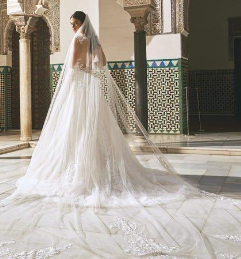
The Veil, the Village & the First Dance:
One day, if you choose to marry, your wedding may not look like the weddings I grew up with.
Maybe it will happen far from Portugal. Maybe your guests will speak different languages. Maybe the person standing beside you will come from a completely different culture.
Maybe there will be traditions from two families woven together—some old, some new, some created just for you.
And that is how it should be.
Because culture is not something we leave behind when we cross oceans. It is something we carry with us.
But before you decide which traditions belong in your future, I want you to understand the meaning behind the ones from our past.
Because a Portuguese wedding was never just about a beautiful dress, a church, music, or a feast.
It was about faith.
Family.
Community.
And making sure that when two people began a new life, they never began it alone.
Before the Wedding: When Two Families Become One
Long before the wedding day itself, the marriage begins in smaller moments.
In Portugal, family has always been at the heart of everything.
Traditionally, marriage was not only a promise between two people—it was the joining of two families. Parents, grandparents, cousins, neighbours, and friends all played a role.
You may laugh sometimes at how many opinions our families have.
The flowers.
The food.
The guest list.
Who sits where.
But underneath all of that involvement is something simple:
Everyone wants to place a little piece of love into your beginning.
The Blessing Before You Leave Home
One of the quietest and most beautiful Portuguese traditions happens before the celebration even begins.
The bride and groom prepare at their family homes, surrounded by those who raised them.
There is often a moment before leaving—a blessing from parents and grandparents.
Sometimes it is spoken.
Sometimes it is a prayer.
Sometimes it is simply a mother adjusting a veil, a father holding back tears, or a grandmother making the sign of the cross.
Remember this:
Not every ritual announces itself.
Sometimes culture is found in the smallest gestures.
The last hug before leaving home.
The final look in the mirror.
The understanding that you are stepping forward carrying everyone who helped you arrive there.
The Church Ceremony: Promises Made Before Generations
For many Portuguese families, especially those with Catholic heritage, the church ceremony is central.
The church is not simply a location.
It is a place where generations before you may have stood:
parents
grandparents
great-grandparents
The wedding Mass includes prayers, readings, music, and the exchange of vows and rings.
The rings are circles—without beginning or end—symbolising commitment and continuity.
But perhaps the most powerful part is looking around the church.
Because marriage is not witnessed by strangers.
It is witnessed by the people who will remind you of your promises when life becomes difficult.
The Dress, the Veil and Something Passed Down
Portuguese brides today often wear white wedding dresses, but historically wedding clothing reflected region, family background, and local traditions.
In some parts of Portugal, traditional wedding attire included richly embroidered garments, colourful regional dress, and jewellery passed through families.
Gold jewellery especially has always held meaning.
A necklace.
A pair of earrings.
A bracelet from your grandmother.
These were never only decorations.
They were little pieces of family history.
So if you marry far from Portugal, remember:
You do not need to recreate everything.
Wear the earrings.
Carry the rosary.
Use your grandmother’s handkerchief.
Keep one small thing that whispers:
“I know where I come from.”

The Coins: Building a Life Together
In some Portuguese Catholic weddings, couples include the tradition of wedding coins, known in many Iberian cultures as arras.
Coins are exchanged or blessed as a symbol of:
trust
responsibility
shared prosperity
The meaning is not about wealth.
It is about partnership.
A reminder that from this day forward:
Your successes are shared.
Your challenges are shared.
Your future is something you build together.
The Exit: Rice, Flowers and Wishes for the Future
When the couple leaves the church, guests traditionally gather outside.
There is cheering.
There are embraces.
And often, rice or petals are thrown.
You might wonder:
Why rice?
Because for generations, rice represented abundance and fertility—a wish that the couple’s new life would grow.
Today, many people use:
flower petals
confetti
bubbles
The object changes.
The wish remains.
May your life together be full.
The Celebration: When the Whole Village Comes
Portuguese weddings are famous for one thing:
Nobody leaves hungry.
The reception is not just a party.
It is hospitality expressed through food.
Traditionally, weddings were community celebrations. In villages, neighbours and relatives would help prepare, cook, decorate, and celebrate.
Today, many weddings happen in beautiful venues called quintas—countryside estates with gardens, vineyards, and banquet spaces.
But the feeling remains the same.
Come in.
Sit down.
Eat.
Celebrate with us.
The Food: How We Say Love Without Saying It
Portuguese families do not always say everything with words.
Sometimes we say it with food.
A wedding feast might include:
seafood reflecting Portugal’s connection to the ocean
bacalhau dishes honouring tradition
roasted meats shared at large tables
regional cheeses and breads
endless desserts
And of course, the wedding cake.
In some celebrations, there is a dessert table filled with sweets:
pastéis
almond treats
regional pastries
Because sweetness is symbolic.
A sweet beginning.
A sweet life.
The Music and Dancing: Where Memories Are Made
At some point in the night, something always happens.
The formalities end.
The music starts.
Someone who claimed they were “not dancing” begins dancing.
Generations mix.
Young cousins dance beside grandparents.
Traditional Portuguese music may blend with modern songs.
And this is important:
Culture survives on dance floors.
Not because every step is perfect.
But because joy is remembered.
Carrying a Portuguese Wedding Abroad
My child, if you marry somewhere far from Portugal, please understand this:
You do not have to copy the past perfectly.
You only have to carry its meaning.
Have your family bless you before the ceremony.
Serve one dish that tastes like childhood.
Play one song your grandparents loved.
Include a prayer if faith matters to you.
Wear something that belonged to someone before you.
Tell your guests why these things matter.
That is how culture stays alive.
The Thread That Travels
You may build your home somewhere our ancestors never imagined.
You may speak another language every day.
Your children may grow up knowing many cultures, not just one.
That is not losing Portugal.
That is allowing Portugal to travel.
Because home was never only a place on a map.
Sometimes home is:
A recipe.
A song.
A piece of gold jewellery.
A family gathered around a table.
A hand placed on your shoulder before you begin something new.
So when your wedding day comes, do not worry about doing everything exactly as it was done before.
Just remember why it was done.
Take the pieces that matter.
Carry them forward.
And know that wherever you stand in the world—
you do not stand there alone.
Comments